

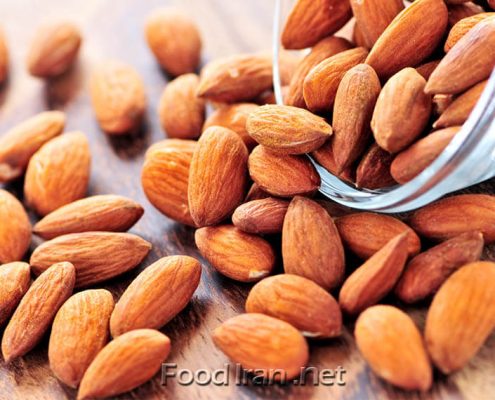
Almond, Argan Prunusdulcis, Synonym (Biology) Prunusamygdalus is a species of fruit, the tree of which is native to the Middle East and South Asia. In principle, almonds are not considered true beans, but are of a variety of shafts, which have an outer shell and a hard inner covering, in which the seed (the brain) lies within it. The height of the almond tree is 4 to 10 meters, and its diameter can reach more than 30 centimeters. The largest producer of almonds in the world is the United States of America and Spaniards. Iran produces 6% of this fruit. 49% of ammonium nitrate content makes 62% anacrylic acid unsaturated, 24% linoleic acid unsaturated, and 6% anaphylstimic acid. The amount of energy per 100 grams of almonds is 576 kilocalories. Planting almond tree is easy in the garden. You can use it in winter to sprout in spring. Be careful that your plant should see the sunlight and be irrigated in the summer once a week. The best type of this product is found in the Tzujz city of East Azarbaijan.
Root word
The word “Bammarish” is derived from Persian in Arabic, Hindi and Urdu.
Almond blossom
The largest almond production area in California is in the United States. Between February and March, blooms that are very similar to blossoms are flourishing. The weather type at this time will greatly affect almond production in that year. From the flower situation, there are important information about harvesting that year, so each stage of the flower status has a special name.
- The green chip is called almond green buds. This stage is before pink sprout.
- Pink buds are seen in pink buds.
- Popcorn, buds like swollen popcorn but have not yet opened.
- Blossom, full blossom
- Perfumed Petals, Petals
- Jacket, petals are poured, and only the bowl of flowers is left over.
- Out of the sweater, the flower bowl has replaced its fruit.
Related suggestions
 https://sakhafarms.com/wp-content/uploads/2018/01/Almond-Food-Iran-blog-6.jpg
570
800
adminsite
https://sakhafarms.com/wp-content/uploads/2025/04/Sakhafarms-Arm.png
adminsite2018-07-12 18:37:212018-07-12 18:37:21Learn more about almond oil
https://sakhafarms.com/wp-content/uploads/2018/01/Almond-Food-Iran-blog-6.jpg
570
800
adminsite
https://sakhafarms.com/wp-content/uploads/2025/04/Sakhafarms-Arm.png
adminsite2018-07-12 18:37:212018-07-12 18:37:21Learn more about almond oil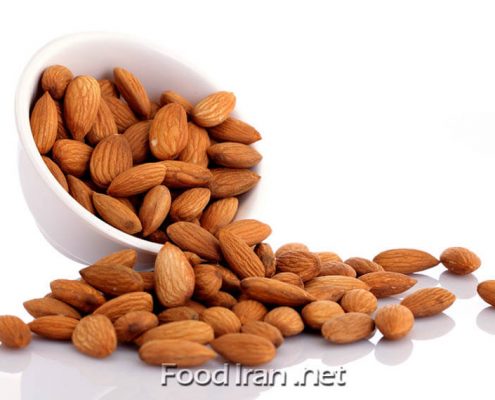 https://sakhafarms.com/wp-content/uploads/2018/01/Almond-Food-Iran-blog-5.jpg
570
800
adminsite
https://sakhafarms.com/wp-content/uploads/2025/04/Sakhafarms-Arm.png
adminsite2018-07-12 18:34:492018-07-12 18:34:49What are the almond minerals?
https://sakhafarms.com/wp-content/uploads/2018/01/Almond-Food-Iran-blog-5.jpg
570
800
adminsite
https://sakhafarms.com/wp-content/uploads/2025/04/Sakhafarms-Arm.png
adminsite2018-07-12 18:34:492018-07-12 18:34:49What are the almond minerals?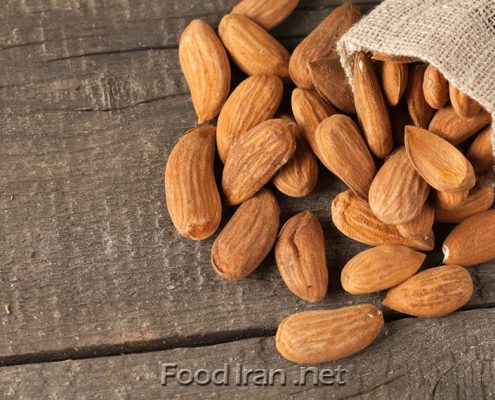 https://sakhafarms.com/wp-content/uploads/2018/01/Almond-Food-Iran-blog-1.jpg
570
800
adminsite
https://sakhafarms.com/wp-content/uploads/2025/04/Sakhafarms-Arm.png
adminsite2018-07-12 18:31:532018-07-12 18:31:53Know the mountain almonds
https://sakhafarms.com/wp-content/uploads/2018/01/Almond-Food-Iran-blog-1.jpg
570
800
adminsite
https://sakhafarms.com/wp-content/uploads/2025/04/Sakhafarms-Arm.png
adminsite2018-07-12 18:31:532018-07-12 18:31:53Know the mountain almonds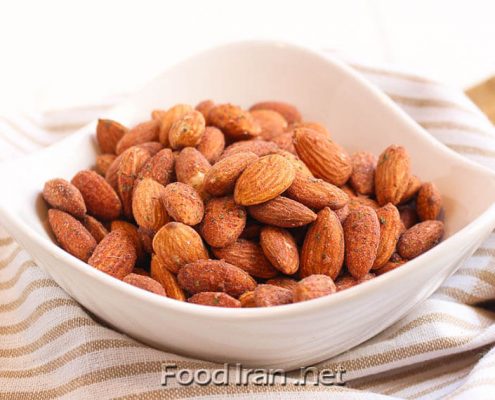 https://sakhafarms.com/wp-content/uploads/2018/01/Almond-Food-Iran-blog-4.jpg
570
800
adminsite
https://sakhafarms.com/wp-content/uploads/2025/04/Sakhafarms-Arm.png
adminsite2018-07-12 18:27:562018-07-24 15:44:29Getting familiar with Iranian Almond
https://sakhafarms.com/wp-content/uploads/2018/01/Almond-Food-Iran-blog-4.jpg
570
800
adminsite
https://sakhafarms.com/wp-content/uploads/2025/04/Sakhafarms-Arm.png
adminsite2018-07-12 18:27:562018-07-24 15:44:29Getting familiar with Iranian Almond


