

Extraordinary benefits of fig
In terms of traditional medicine, fig is warm and wet.
Hippocrates has on several occasions named figs as laxative and nutritious and has found it useful in inflammatory diseases of the body.
Fresh figs are a rich source of beta-carotene and vitamin C. These two antioxidants play an important role in preventing cancer. Figs also contain a wide range of other vitamins.
Figs are a good source of potassium, magnesium, calcium, phosphorus and vitamins A, B and C, iron and sulfur.
Figis treatment for anorexia, anemia, increased bone density, breast and intestinal softening, gum infections, bowel ligation, and treatment of chronic constipation. Its enhance liver function and repels body toxins.
Due to its high content of sulfur, cause hair growth and prevents hair loss and treats dandruff.
Due to its high content of potassium, it increases the alkalinity of the body and is very effective in eliminating urea and blood lipids.
Boiled figs are useful in inflammation of the respiratory tract and pulleys for sore throat and cold.
It eliminates gum infections. It causes teeth whitening and scarring. In gum swelling relieves pain, relieves inflammation and eliminates bad breath.
Regulates female hormones. It regulates hormonal processes and regulates irregularities in the uterus and the menstrual cycle. For this reason, it is recommended to use this fruit during menopause.
It also increases breast milk during lactation.
Fig tree, leaf and flower
The fig tree with yellowish-green leaves up to six meters in height and, due to lack of resistance to extreme cold is cultivated in temperate and tropical regions.
Figs usually begin to bear fruit by the fourth year and bear fruit by the age of twenty.
The leaf of the fig tree is clawed and has 3 to 5 lobes. The part that is known as the fruit of fig tree, which is nourished by humans, is not the fruit itself, but rather a mycotic appendage where the fig flowers are housed in large numbers and the sugars accumulate in the appendix.The male and female flowers of the fig tree are separated from each other, but are located on a single base inside the receptacle, in other words, the fig tree is a one plant.
If we open the fig fruit and form a surface, the male flowers that carry the pollen are next to the outside of the plate, and the female flowers that carry the ovary and if the seed carrier is inoculated, located in the center. Inoculation of fig flowers is carried out by different insects, the most important being a very small insect of the Chalcididaefamily.
Fig leaves have been used as a diuretic, soothing and repellent for intestinal worms and the brewed fig leaf has been used as a sedative and has been prescribed for cough treatment.
Figs also contain high levels of female hormones, so boiled leaves are very effective in removing polycystic ovaries.
Fig syrup
Fig juice is useful for removing warts, corns and cuticles and is a good medicine for depression.

Cons of fig fruit
Excessive consumption causes bloating and diarrhea and is not recommended for eye disease. Due to the high sugar content in figs, this fruit is not suitable for people with diabetes and should not be consumed more than two times a day. The sugar content in dried figs is 30 to 40 percent higher than fresh.
Not suitable for weak livers and those with weak livers should eat figs with walnuts.
It is harmful for people with gastrointestinal disorders.
Excessive eating of figs is harmful to the stomach and eyes. These effects are partially counteracted by celery.
Related suggestions
 https://sakhafarms.com/wp-content/uploads/2018/04/Dried-Fig-Food-Iran-A4.jpg
570
800
adminsite
https://sakhafarms.com/wp-content/uploads/2025/04/Sakhafarms-Arm.png
adminsite2018-08-03 19:59:302019-12-24 17:54:51Cosmetic Properties of Figs
https://sakhafarms.com/wp-content/uploads/2018/04/Dried-Fig-Food-Iran-A4.jpg
570
800
adminsite
https://sakhafarms.com/wp-content/uploads/2025/04/Sakhafarms-Arm.png
adminsite2018-08-03 19:59:302019-12-24 17:54:51Cosmetic Properties of Figs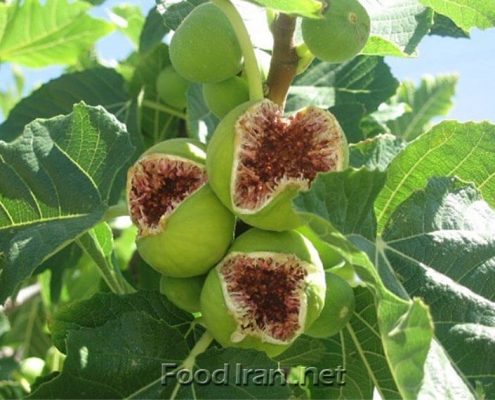 https://sakhafarms.com/wp-content/uploads/2018/04/Dried-Fig-Food-Iran-A6.jpg
570
800
adminsite
https://sakhafarms.com/wp-content/uploads/2025/04/Sakhafarms-Arm.png
adminsite2018-08-03 19:56:332019-12-24 17:56:08Introduction to fig trees
https://sakhafarms.com/wp-content/uploads/2018/04/Dried-Fig-Food-Iran-A6.jpg
570
800
adminsite
https://sakhafarms.com/wp-content/uploads/2025/04/Sakhafarms-Arm.png
adminsite2018-08-03 19:56:332019-12-24 17:56:08Introduction to fig trees https://sakhafarms.com/wp-content/uploads/2018/04/Dried-Fig-Food-Iran-A2.jpg
570
800
adminsite
https://sakhafarms.com/wp-content/uploads/2025/04/Sakhafarms-Arm.png
adminsite2018-08-03 19:53:432019-12-24 17:56:49Extraordinary benefits of fig
https://sakhafarms.com/wp-content/uploads/2018/04/Dried-Fig-Food-Iran-A2.jpg
570
800
adminsite
https://sakhafarms.com/wp-content/uploads/2025/04/Sakhafarms-Arm.png
adminsite2018-08-03 19:53:432019-12-24 17:56:49Extraordinary benefits of fig https://sakhafarms.com/wp-content/uploads/2018/04/Dried-Fig-Food-Iran-A3.jpg
570
800
adminsite
https://sakhafarms.com/wp-content/uploads/2025/04/Sakhafarms-Arm.png
adminsite2018-08-03 19:48:542019-12-24 17:57:18Introduction to fig history
https://sakhafarms.com/wp-content/uploads/2018/04/Dried-Fig-Food-Iran-A3.jpg
570
800
adminsite
https://sakhafarms.com/wp-content/uploads/2025/04/Sakhafarms-Arm.png
adminsite2018-08-03 19:48:542019-12-24 17:57:18Introduction to fig history


