

Variety of dates in Iran
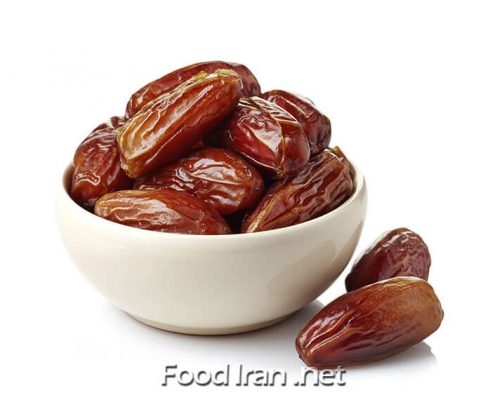
Varieties of dates in Iran are up to 100 kinds. Native date cultivars in Balochistan, Iran: Mazafati dates (the best Ruttab of the world), Rabbi, Shakari, Halile, Abrugen, Golgi, Charban, Hasheie, Javandak, Eshkanjak, Popu, Desski, Vardivar, Barni, Klot, Molsi, Kruch.
Native date cultivars in Bushehr: Ghasb, Kabkab, Samerun, Shekar, Sisi, Hallo, Sarvari, Zandani, KhashenKhar, StakSorko, Morso, Khasooie, Jomadi, Beirami, Tiras, Shahabi, Lash, Kennedy, Khanizi, Semili, Khezri, Gantar, Berimi, Sheikh Ali, Zamardo, DehDarab, Ahromi, Khavizi, Khavar, Makti, Shakhoni, Mosalli, Jozzi, Ghasab and Radasti.
Native date cultivars in Hormozgan: Piarm, Mordar Sang, Halili, Mazafati, Khasooie, Khanizi, Shahani, Kriteh, Zorak and Kolk Sorkh.
Native date cultivars in Jiroft: Mazatifi dates (the best Ruttab of the world), Ali Mehtari, Shekari (these two are the earliest dates of the species that are the most locally-consumed), Clote (Calite), Mordar Sang (the only cold nature in the world) Halili, Khanizi, Roghani, Shahani, Zahedi, Khazravi, Rabbi, Negar (has very long fruits), Gardiall, Ghorbani, Ajili.
Native date Cultivars in the West of Khuzestan: Liloe, Barahi, Zahedi, Deiri, Ashkar and Berim, Halavi, Balyani, Soidani, Hedak, Shekar, Bent Al-Sab, DagalZard, Khezravi, Stameran, Boubki, Chabchab, Mashtom, Jahromi, Amoobahri, DagalGhermez, Farsi, Haddel, Khosab, Hamravi, Hasavi, Eshagh, Jozi and Gentar.
Native date cultivars in Bam and Narmashir: Mazafati, Crot, GhandShekan (Sang Shekan), Rabbi, Khrik, Helilei.
The subtotal level of date cultivation is about 115,000 hectares, 10% of which is under the cultivation of seedlings and the rest under the cultivation of fertile trees.
The average annual production in developed countries, such as the United States, is about 80 to 100 kilograms per palm; in Iran, the average date production is between 15 and 20 kilograms, per view.
Typically, 125 palms are planted per hectare (of land), and if the average date production for each person is 20 kg, then from each hectare of the palm tree, about 2500 kg dates are harvested, of which about 128 diphtheria sugar is obtained from these dates. The annual production of dates in the world is about two to two and a half million tons, and Iran with a production rate of about 350 thousand tons of dates annually is at the top of the date producing countries.
Related suggestions
 https://sakhafarms.com/wp-content/uploads/2025/04/Sakhafarms-Arm.png
0
0
adminsite
https://sakhafarms.com/wp-content/uploads/2025/04/Sakhafarms-Arm.png
adminsite2025-05-19 16:19:242025-05-19 16:54:36Date Rabi A Natural Iranian Gem
https://sakhafarms.com/wp-content/uploads/2025/04/Sakhafarms-Arm.png
0
0
adminsite
https://sakhafarms.com/wp-content/uploads/2025/04/Sakhafarms-Arm.png
adminsite2025-05-19 16:19:242025-05-19 16:54:36Date Rabi A Natural Iranian Gem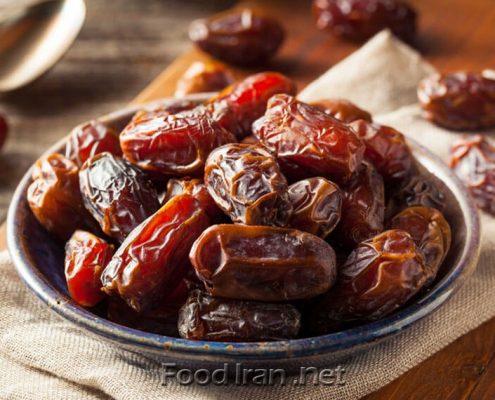 https://sakhafarms.com/wp-content/uploads/2018/03/date-Food-Iran-A6.jpg
570
800
adminsite
https://sakhafarms.com/wp-content/uploads/2025/04/Sakhafarms-Arm.png
adminsite2018-07-23 19:31:072019-04-04 12:07:02Different types of dates
https://sakhafarms.com/wp-content/uploads/2018/03/date-Food-Iran-A6.jpg
570
800
adminsite
https://sakhafarms.com/wp-content/uploads/2025/04/Sakhafarms-Arm.png
adminsite2018-07-23 19:31:072019-04-04 12:07:02Different types of dates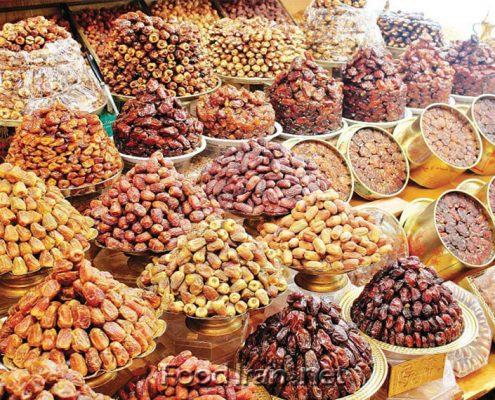 https://sakhafarms.com/wp-content/uploads/2018/03/Iranian-date-Food-Iran-A7.jpg
570
800
adminsite
https://sakhafarms.com/wp-content/uploads/2025/04/Sakhafarms-Arm.png
adminsite2018-07-23 19:27:572019-04-04 12:11:28Introducing Variety of Dates Part III
https://sakhafarms.com/wp-content/uploads/2018/03/Iranian-date-Food-Iran-A5.jpg
570
800
adminsite
https://sakhafarms.com/wp-content/uploads/2025/04/Sakhafarms-Arm.png
adminsite2018-07-23 19:24:072019-04-04 13:28:30Introducing Variety of Dates Part II
https://sakhafarms.com/wp-content/uploads/2018/03/Iranian-date-Food-Iran-A7.jpg
570
800
adminsite
https://sakhafarms.com/wp-content/uploads/2025/04/Sakhafarms-Arm.png
adminsite2018-07-23 19:27:572019-04-04 12:11:28Introducing Variety of Dates Part III
https://sakhafarms.com/wp-content/uploads/2018/03/Iranian-date-Food-Iran-A5.jpg
570
800
adminsite
https://sakhafarms.com/wp-content/uploads/2025/04/Sakhafarms-Arm.png
adminsite2018-07-23 19:24:072019-04-04 13:28:30Introducing Variety of Dates Part II


